Features
Explore what Tekk can do for your development workflow.
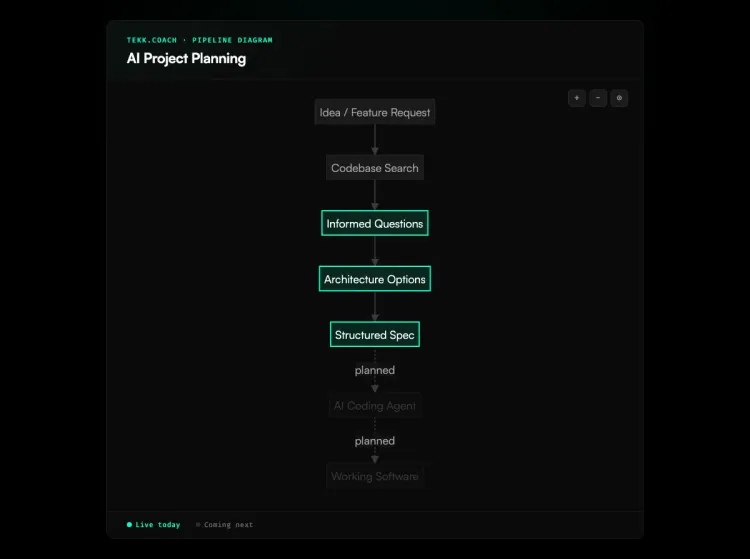
AI Project Planning
AI project planning is only as good as the context the AI has. Ask ChatGPT to plan your payment integration and it'll give you a reasonable-sounding architecture — that doesn't fit your database schema, references a library you're not using, and skips the edge case your existing auth flow creates. The plan sounds right. It's wrong for your project.
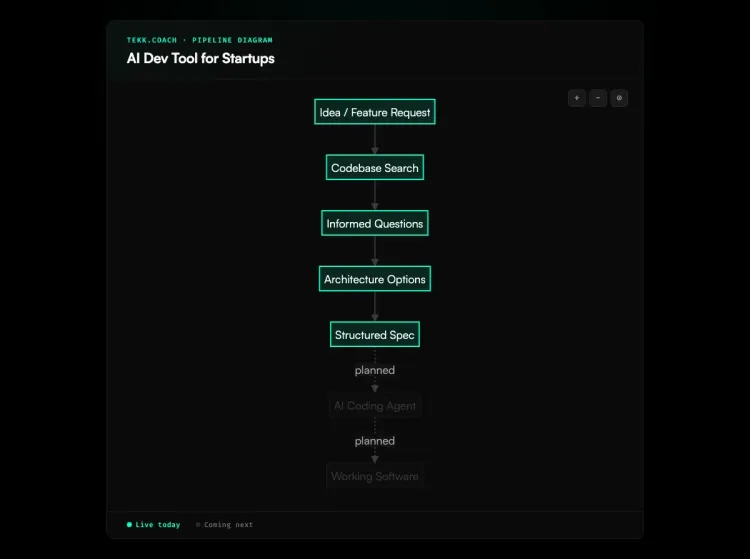
AI Dev Tool for Startups
You're using Cursor or Claude Code. You're shipping fast. And you're rebuilding things you already shipped.
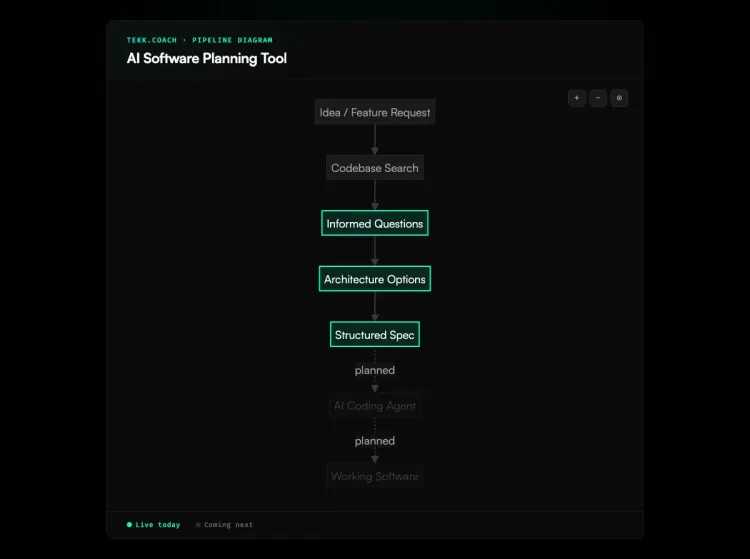
AI Software Planning Tool
Most AI project planning tools don't know your code exists. They give you templates and task lists — plans for a hypothetical app, not the one you're actually building. You still have to translate generic output into something your coding agent can act on. That translation is most of the work you were trying to skip.
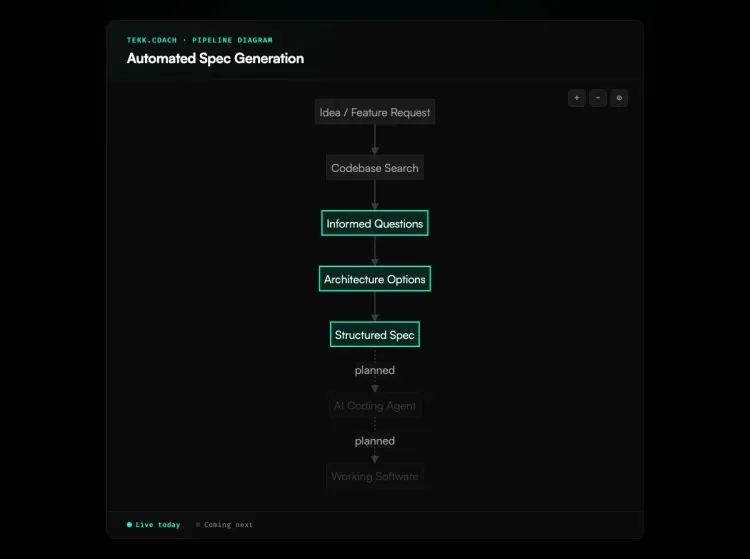
Automated Spec Generation
Writing specs manually is slow. Skipping specs causes rework. Using ChatGPT to generate them produces output that doesn't know your codebase, your stack, or your constraints — and your coding agents flail against it just as much as against a vague paragraph.
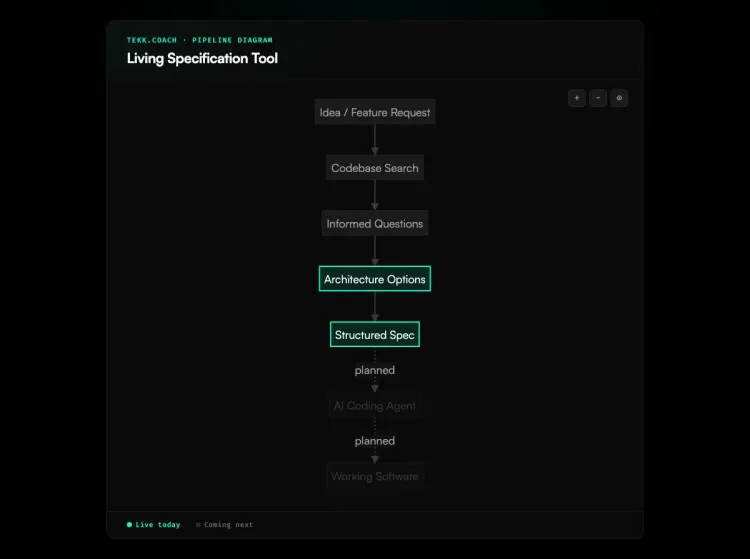
Living Specification Tool
Your spec is in a chat thread. You can't edit it, can't search it, and you lose it when the window closes.
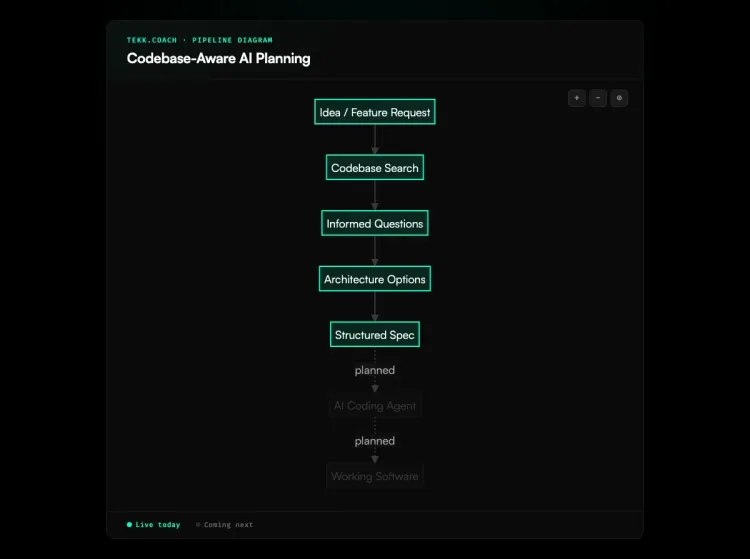
Codebase-Aware AI Planning
AI planning tools that don't read your code give you generic plans. They ask questions the code already answers. They suggest patterns your stack doesn't use. They miss the file that everything depends on.
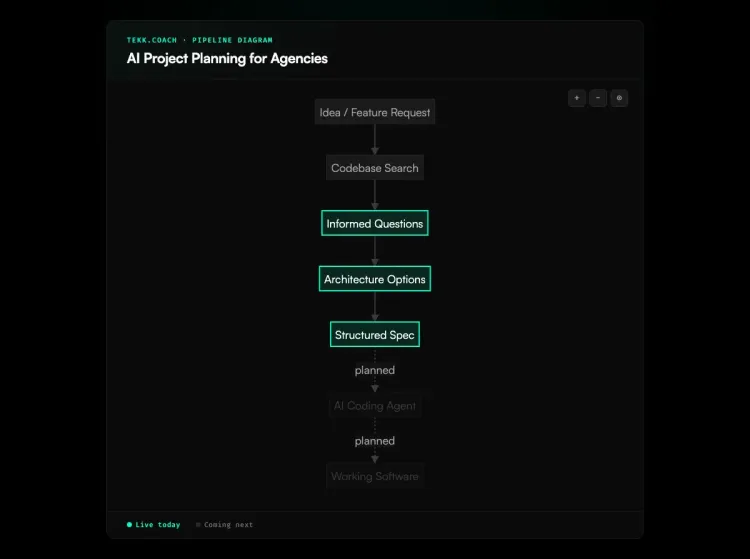
AI Project Planning for Agencies
Scope creep doesn't start when a client asks for more. It starts when the spec never said no.
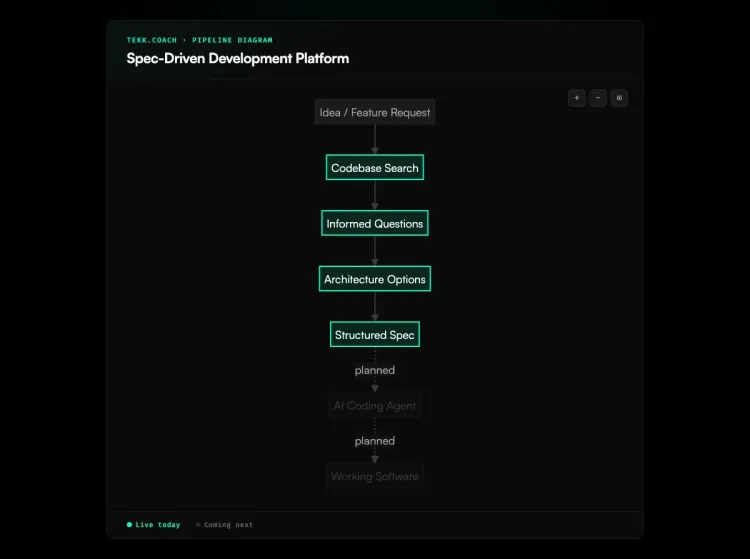
Spec-Driven Development Platform
Your specs are in ChatGPT. Your tasks are in Linear. Your agents are in Cursor. Nothing talks to each other. Every handoff drops context. That's not a platform — that's three tools and a prayer.
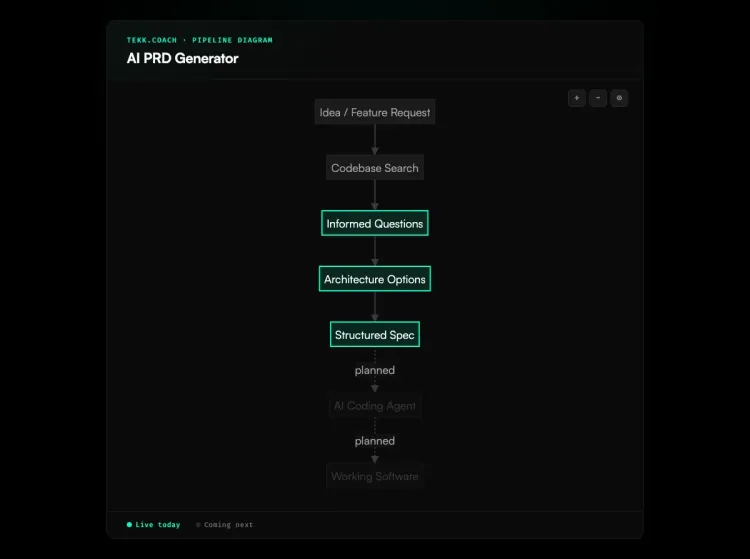
AI PRD Generator
You need a PRD. You open ChatGPT, paste in your feature idea, and get back a polished document that could describe any product on earth. Generic user stories. Obvious success metrics. Zero connection to your actual codebase.
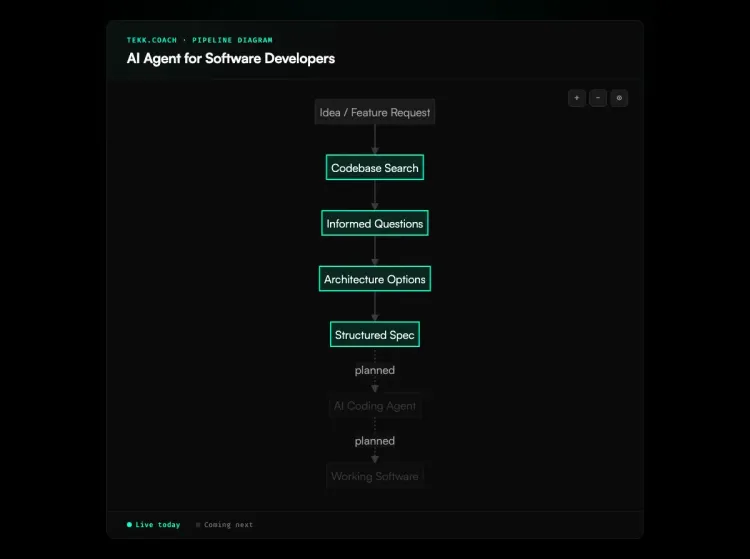
AI Agent for Software Developers
You're already using Cursor, Claude Code, or Codex. They work — until they don't. The agent builds something, it's not quite right, you explain again, it tries again. Rework. The problem isn't the agent. It's what you gave it.
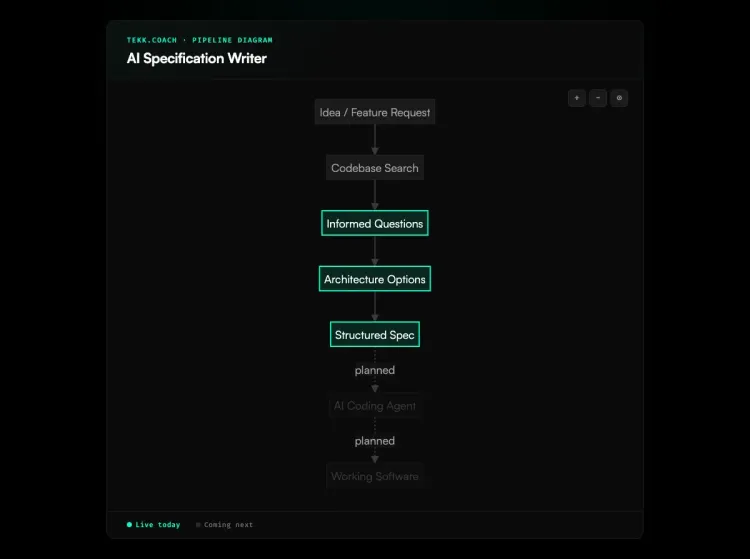
AI Specification Writer
Most AI spec writers take your prompt and return a document. That document could describe any project. It has no idea your auth system uses magic links, that your UserService already handles role-based access, or that your API follows a specific pattern.
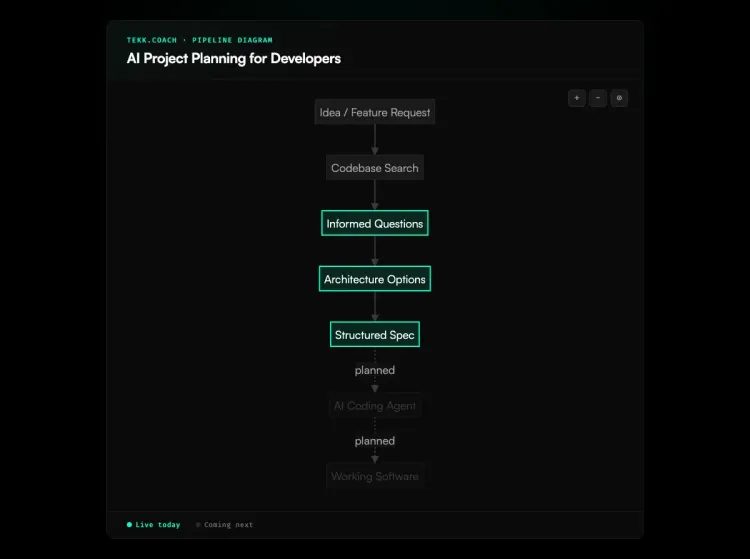
AI Project Planning for Developers
You're building with Cursor, Claude Code, or Codex. The agents are capable. The plans you're feeding them aren't. Vague prompts produce inconsistent code, rework cycles, and features that don't fit the existing architecture.
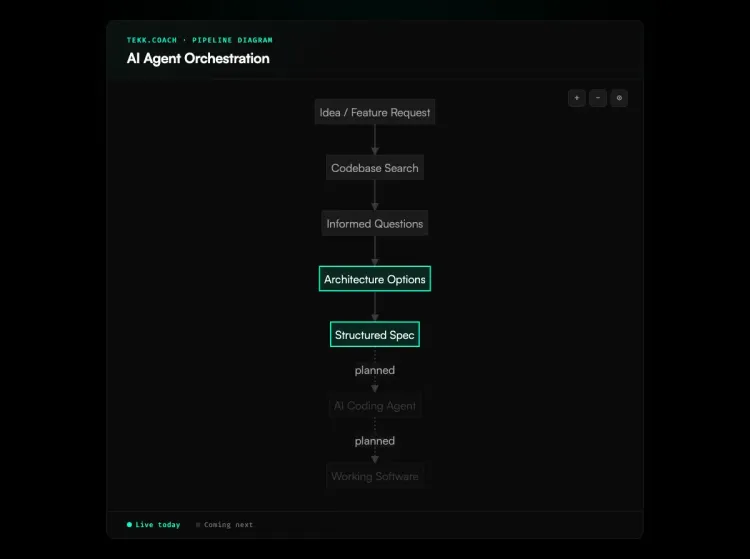
AI Agent Orchestration
Most engineers using Cursor, Codex, or Claude Code hit the same wall: the agents are capable, but nothing coordinates them. Tasks conflict. Context gets lost. You become the orchestrator — manually routing work, resolving dependencies, tracking progress across chat windows. That's not orchestration. That's overhead.
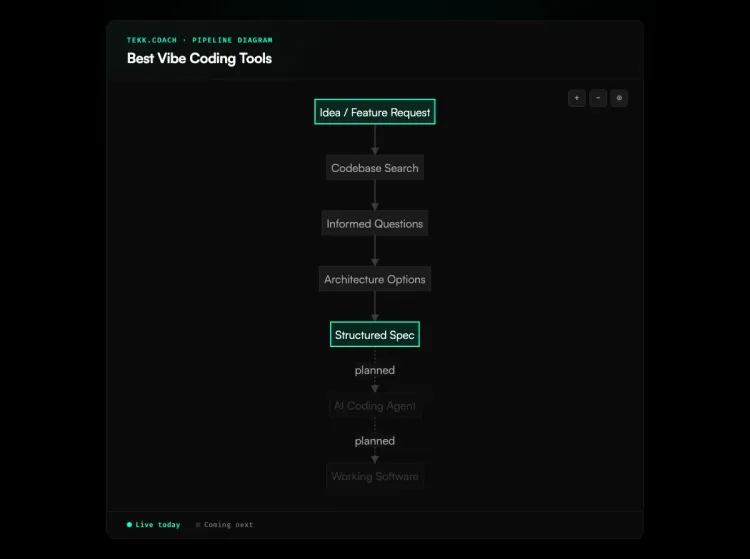
Best Vibe Coding Tool
You've tried the vibe coding tools. Maybe Lovable, maybe Bolt, maybe v0. Results are inconsistent — sometimes it nails it, sometimes it builds something completely off from what you had in mind. You tweak the prompt. Still off. You spend an hour correcting the output.
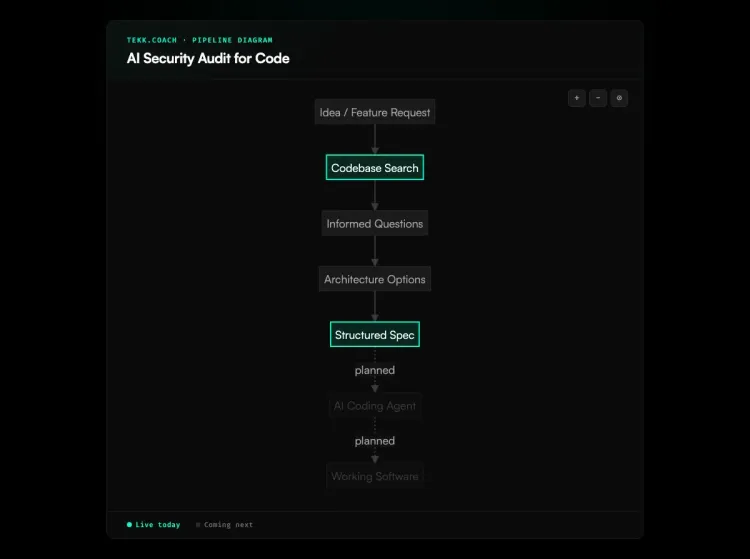
AI Security Audit for Code
You built fast with AI. The code works. Now you need to know if it's secure. Tekk.coach reads your actual codebase — not sampled files, not isolated functions, the whole thing — and runs a security review that finds what coding agents missed: missing input validation, broken auth patterns, hardcoded credentials, exposed endpoints, and more. You get specific findings with file locations, not a generic checklist.
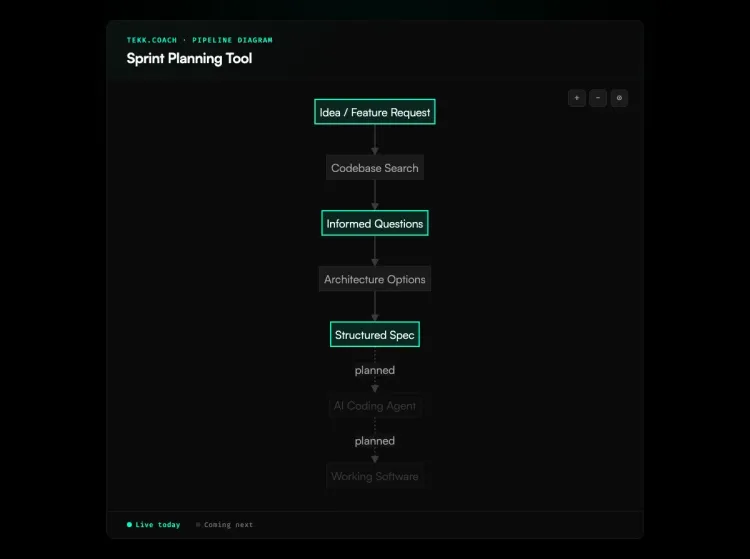
Sprint Planning Tool
Sprint planning fails when the tickets are too vague. Your AI coding agents — Cursor, Claude Code, Codex — can't execute on "fix the auth flow." They need a real spec. Tekk.coach reads your codebase, asks the right questions, and turns each sprint item into a structured spec with scope boundaries, subtasks, file references, and acceptance criteria. Before the sprint starts. No story points. No planning poker. No meetings.
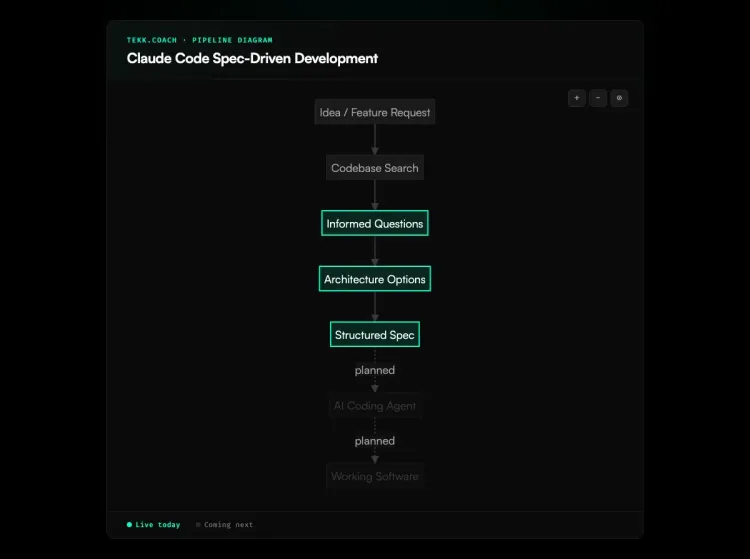
Claude Code Spec-Driven Development
Claude Code is powerful. But it needs a spec, not a paragraph. Hand it a vague prompt and you get scope creep, broken context mid-session, and a third round of rework because "that's not what I meant." Spec-driven development fixes this — but writing the spec is the hard part.
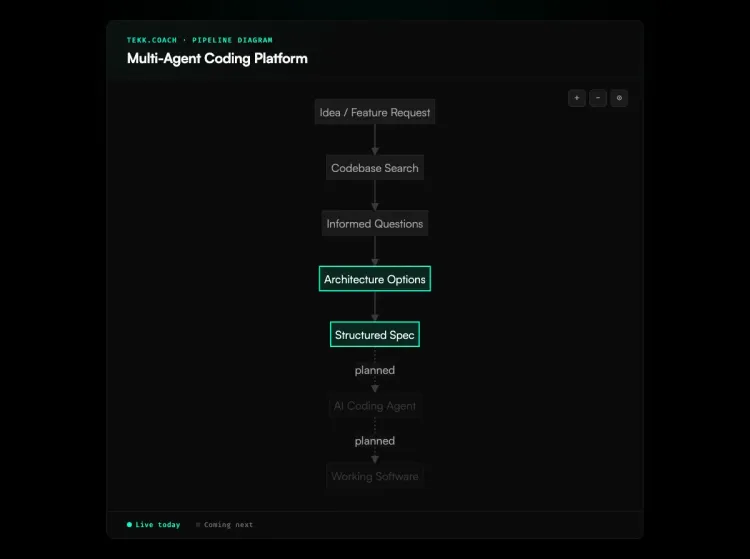
Multi-Agent Coding Platform
Running multiple AI coding agents on the same codebase without a plan is chaos. Conflicting changes. Duplicated work. Three PRs that can't be merged. The problem isn't the agents — it's that they all started from the same underspecified instruction.
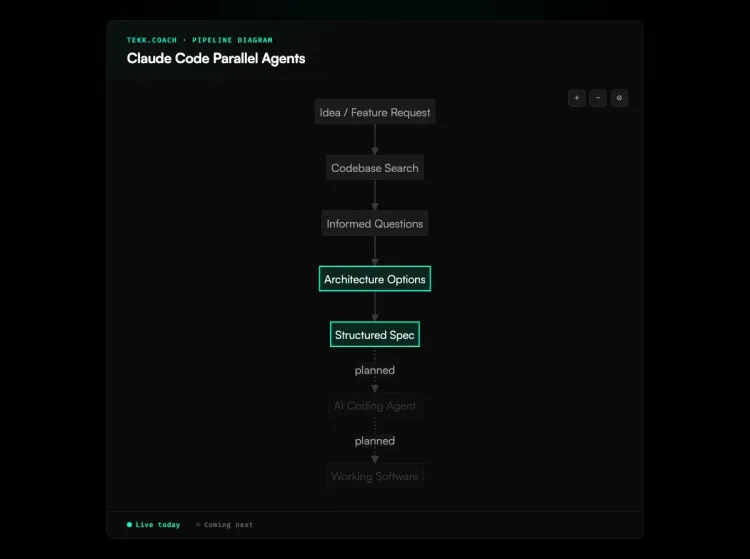
Claude Code Parallel Agents
Running Claude Code parallel agents without structured specs is guesswork at scale. Your agents need codebase-aware task decomposition — subtasks with clear file ownership, acceptance criteria, and dependency mapping — before you dispatch a single one. Tekk.coach produces that decomposition, grounded in your actual repository. Multi-agent execution dispatch is coming next; the planning layer is live today.
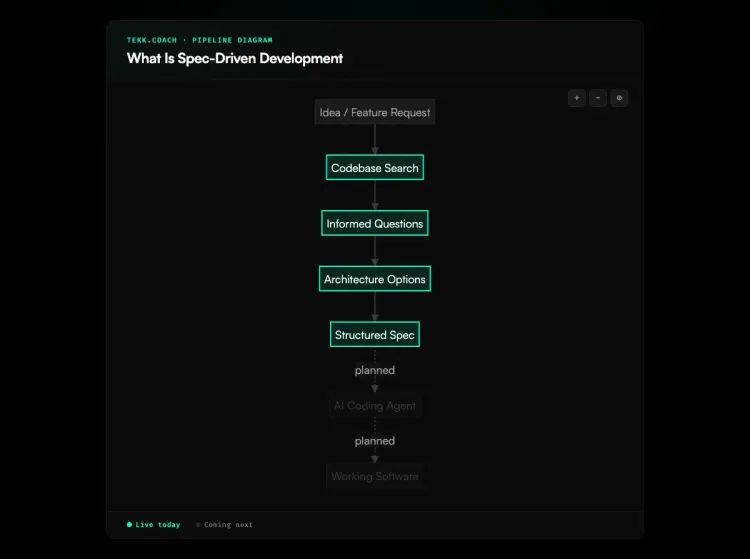
What Is Spec-Driven Development
Most developers skip the spec. They open Cursor, type a paragraph, and let the agent run. It works until it doesn't — usually around the third round of rework, when it becomes clear that the agent built something technically correct but not what was meant.
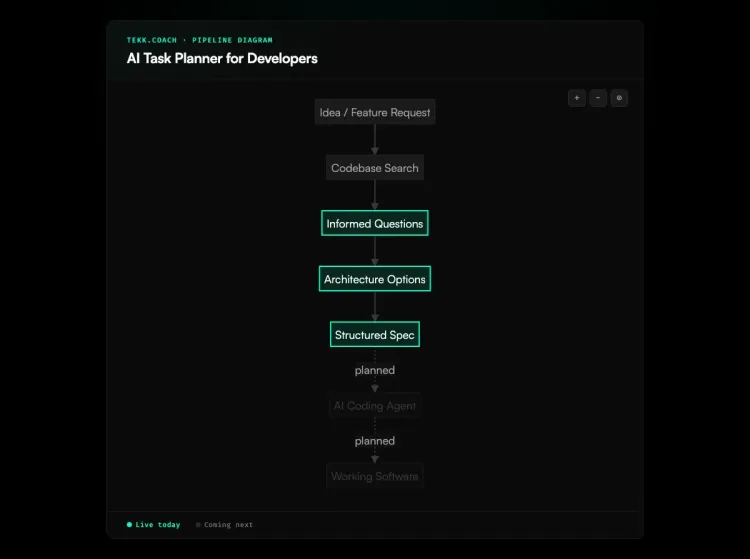
AI Task Planner for Developers
Generic task managers don't understand code. "Implement auth" is not a developer task — it's an intention. A developer task has subtasks, acceptance criteria, file references, and dependency order. Reclaim can reschedule your calendar. Asana can track that something is "In Progress." Neither can tell your coding agent what to actually build.
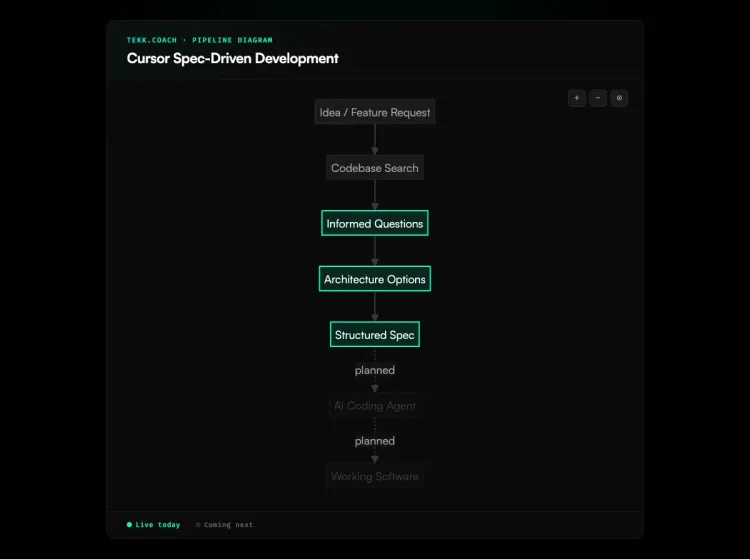
Cursor Spec-Driven Development
Cursor doesn't drift. Your prompt does. Hand Cursor a vague description and you get scope creep, files touched that shouldn't be, and a third round of corrections because "that's not what I meant." Spec-driven development fixes this — but writing a spec that's actually grounded in your codebase is the hard part.
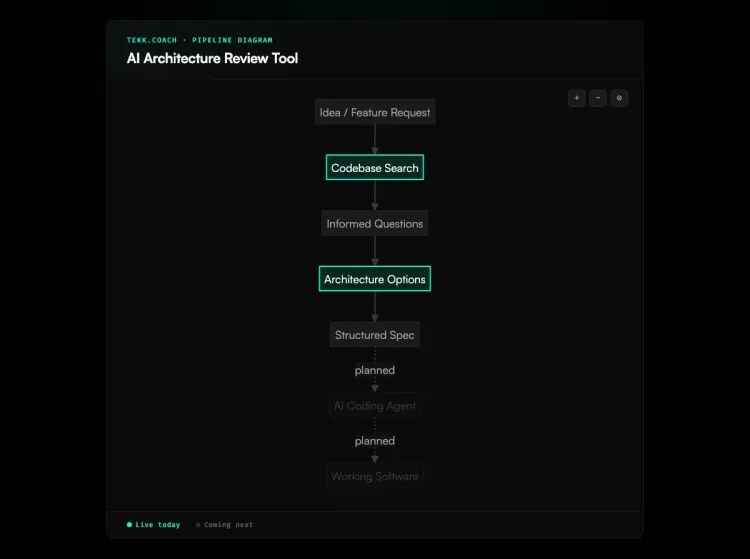
AI Architecture Review Tool
Your codebase is accumulating structural debt you can't see. AI coding agents are shipping code that works at the function level and breaks architectural principles at the system level. You need a tool that reviews the whole system — not just the diff.
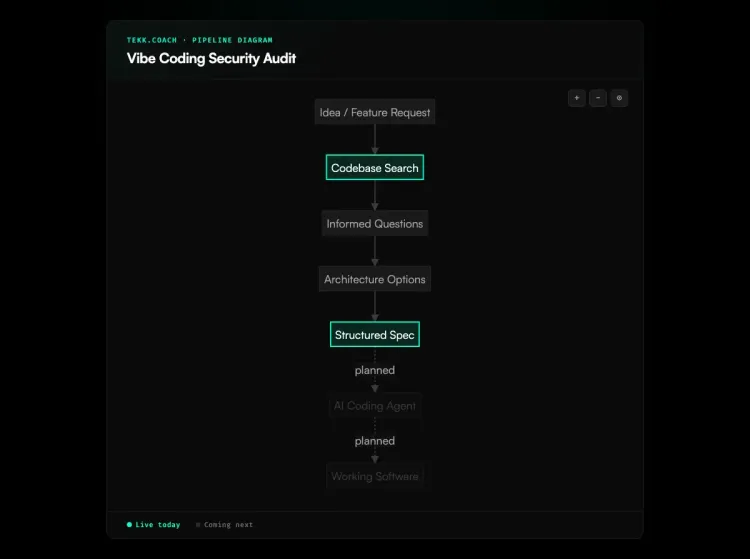
Vibe Coding Security Audit
Forty-seven percent of AI-generated code contains security vulnerabilities, according to Palo Alto Unit 42 research. Vibe coding lets you ship fast — but shipping fast without a security audit is how you end up with a breach after launch.
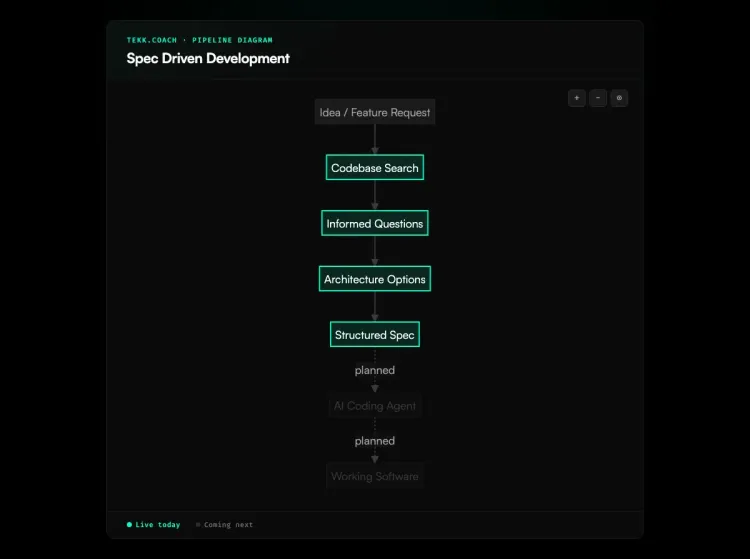
Spec Driven Development
You're building with AI coding agents. Cursor, Claude Code, Codex. They write code fast. They also keep building the wrong thing.
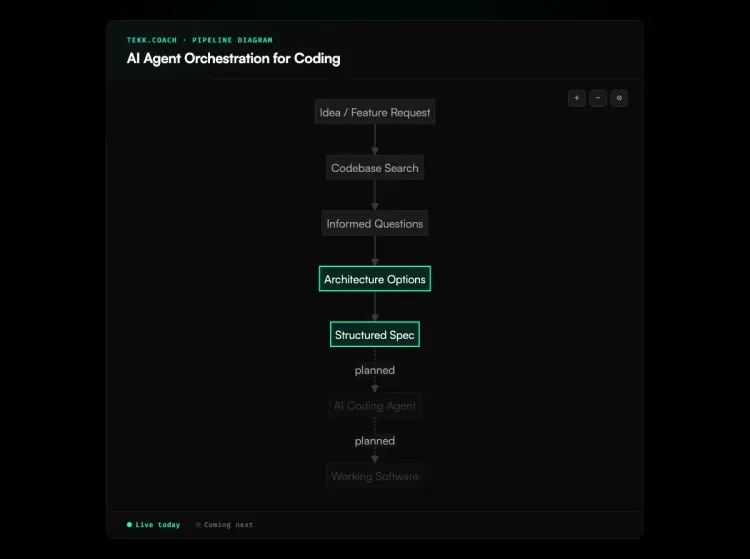
AI Agent Orchestration for Coding
You have Cursor. You have Claude Code. Maybe Codex. Each one can write code. None of them coordinate. You're the one deciding which agent gets which task, pasting context between tools, resolving the conflicts when two agents touched the same file. That's not a workflow — that's manual coordination with extra steps.
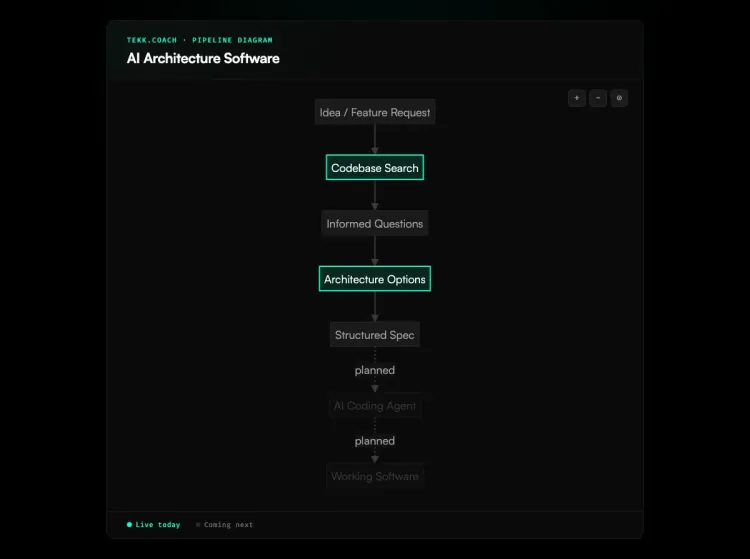
AI Architecture Software
Your AI coding agents are shipping code fast. The architecture is quietly degrading. You don't have a senior architect to catch it — and most AI architecture software reviews diffs, not systems.
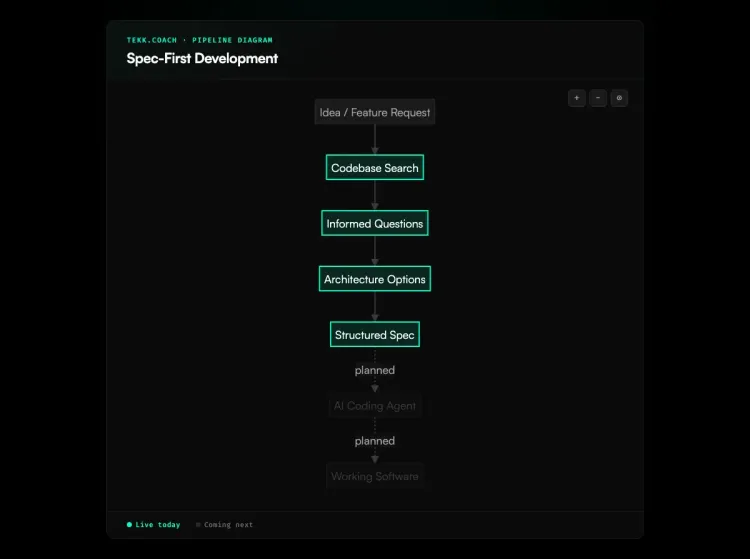
Spec First Development
Writing the spec before the code is the right idea. Doing it well is the hard part. Most developers either skip it (too slow) or do it badly (too generic). Neither works when your coding agent is the one executing.
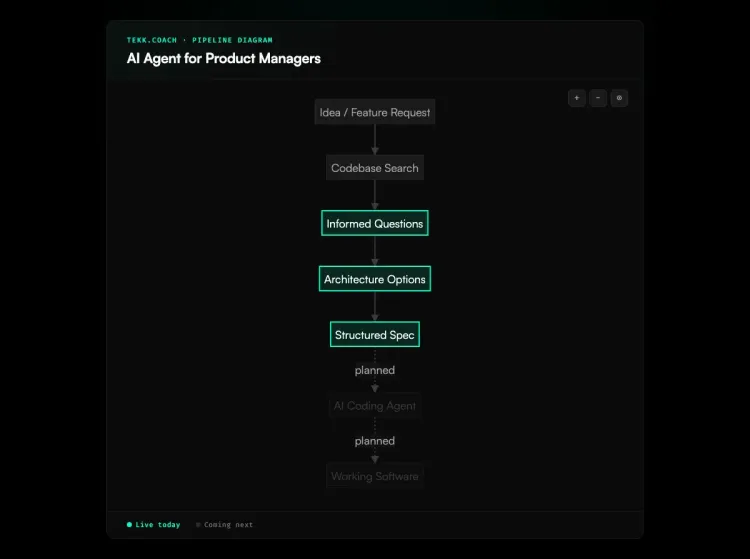
AI Agent for Product Managers
You write a spec. You hand it to engineering. Then you spend the next sprint in clarification meetings — three tickets asking what "handle the edge case" actually means, a Slack thread about which auth library you had in mind, a call to explain scope that wasn't in the doc.
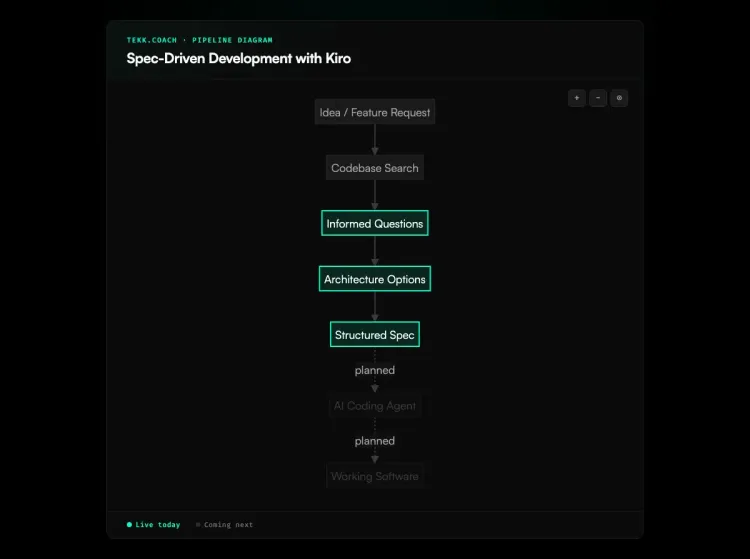
Spec-Driven Development Kiro
Kiro is AWS's agentic IDE with spec-driven development built in. It's a real tool doing something useful. But it's also a new IDE, an AWS ecosystem play, and a commitment to one coding agent. If you want spec-driven development without switching your editor or locking into AWS, there's a different path.
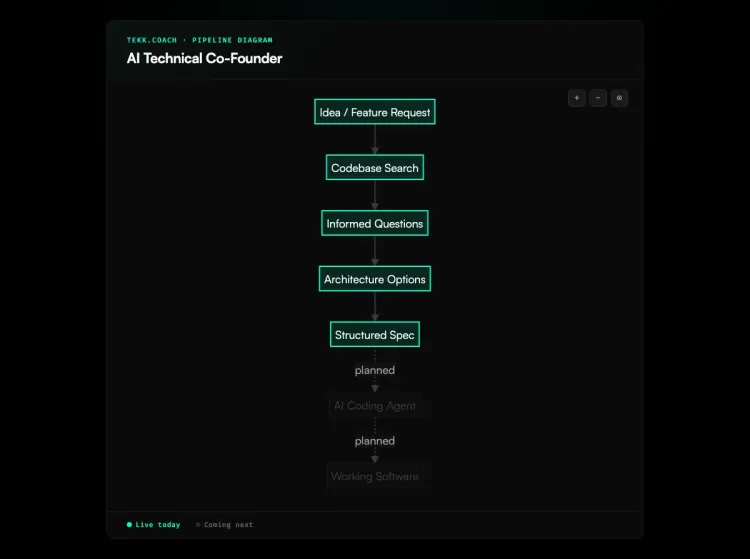
AI Technical Co-Founder
You have the idea. You know the market. You understand the problem better than anyone.
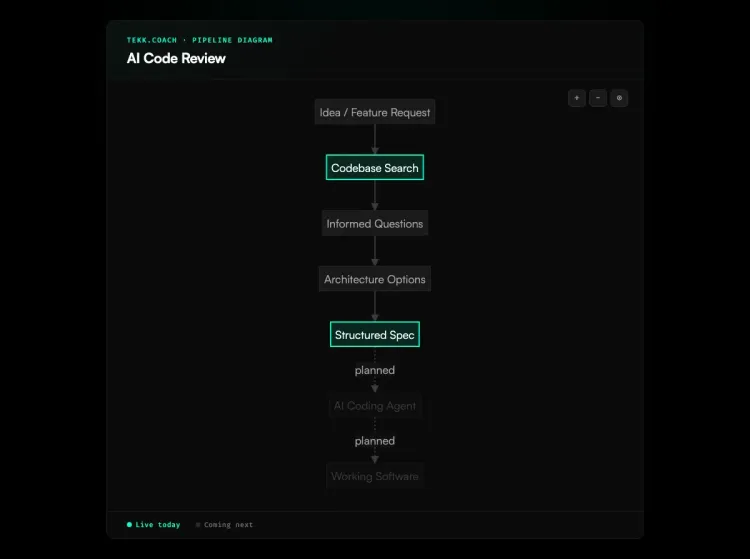
AI Powered Code Review Tools | Tekk.coach
You've been vibe coding. Cursor wrote the auth layer. Claude Code scaffolded the API. It looks reasonable. But Palo Alto Unit 42 analyzed production codebases and found vulnerabilities in 47% of AI-generated code.
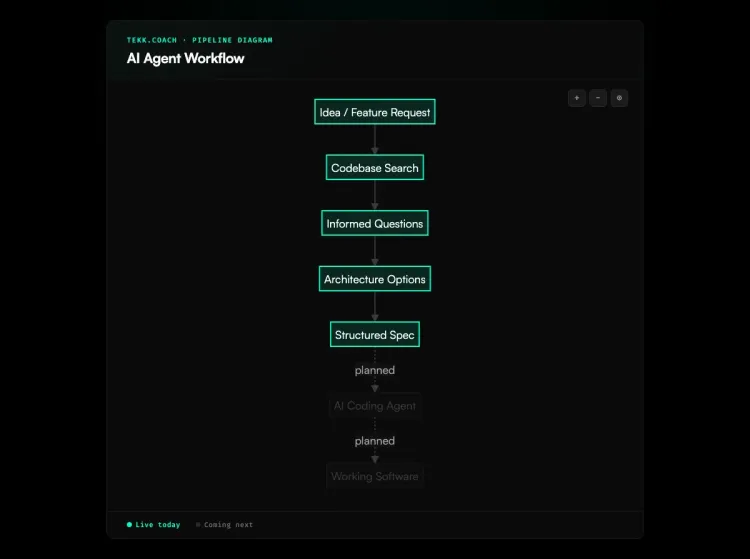
AI Agent Workflow
Most AI agent workflows for coding follow the same pattern: write a prompt, generate some code, find out it's wrong, fix it, repeat. That's not a workflow. That's trial and error with expensive tooling.
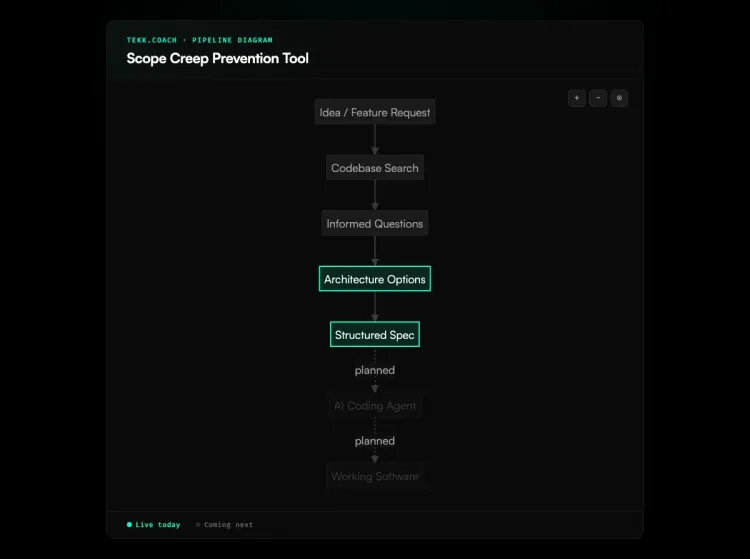
Scope Creep Prevention Tool
AI coding agents do exactly what you describe — including everything you left ambiguous. You asked for a button. The agent added a button, refactored the component it lived in, updated three related files, and introduced a dependency you didn't want. Nothing went wrong, technically. The spec just had gaps.
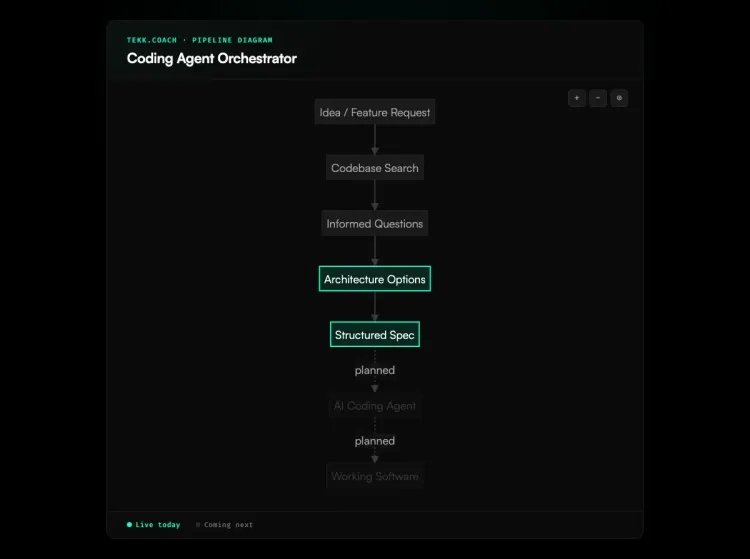
AI Agent Orchestration
Run multiple AI coding agents on the same codebase. All merging to one PR.
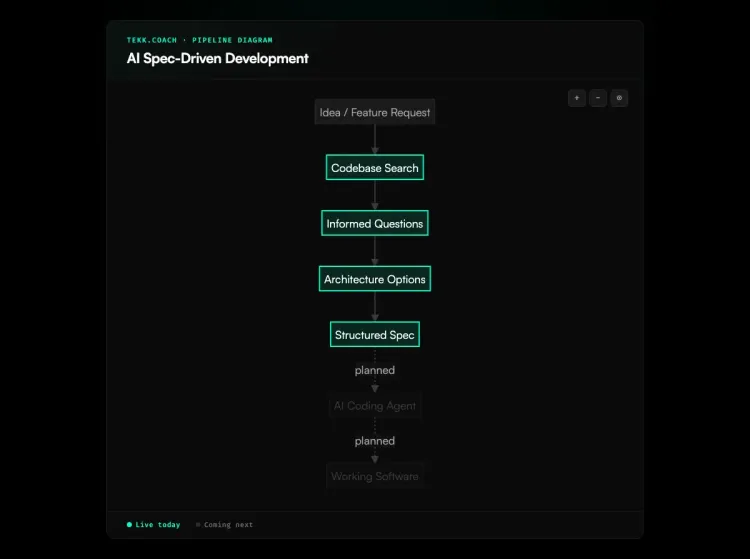
AI Spec-Driven Development
Your coding agent is only as good as its prompt. You've probably already learned this the hard way: vague description, vague result, rework. The promise of AI spec-driven development is that you let AI generate the spec — grounded in your actual codebase — so your agent executes correctly the first time.
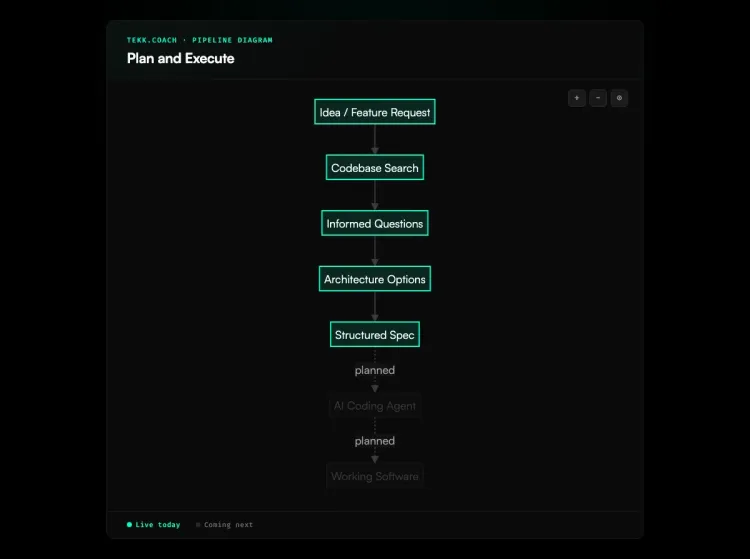
Plan and Execute
Coding agents flail when they execute without a plan. You type a sentence, the agent does something, and now you're debugging code that almost works. Tekk fixes this at the source.
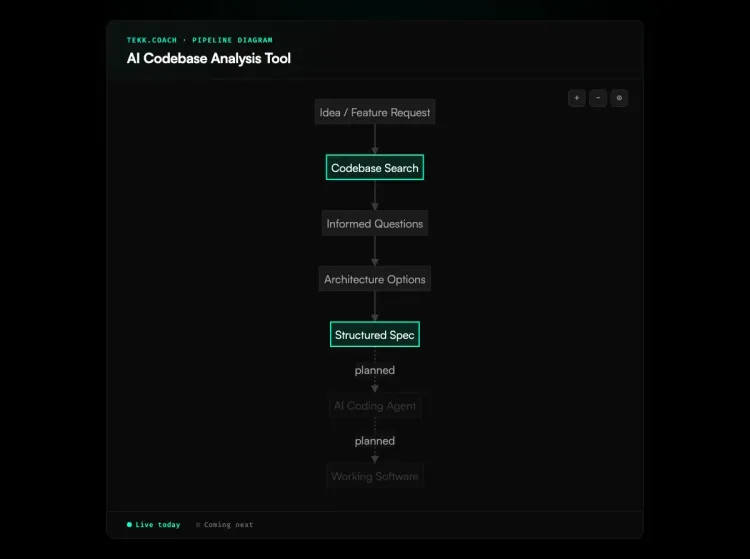
AI Codebase Analysis Tool
Your coding agent just shipped code that duplicated a function that already existed. It ignored your ORM. It didn't know about the service layer it was supposed to call. That's what codebase-unaware AI looks like.
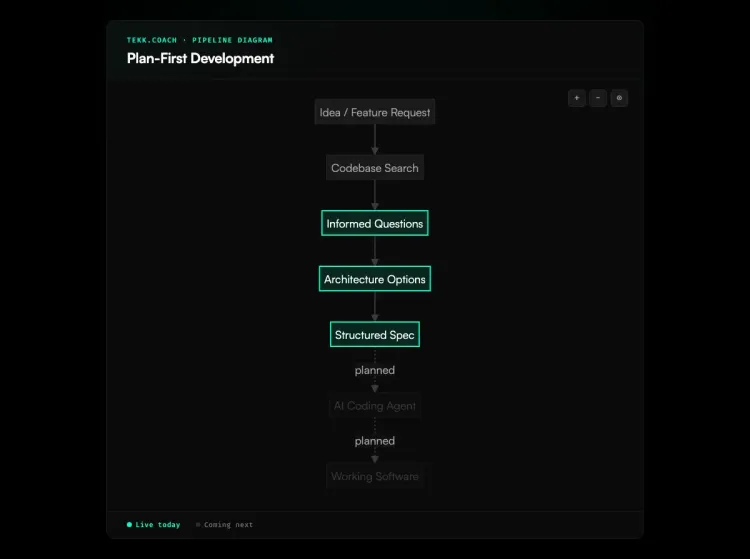
Plan First Development
Vibe coding is fun until your third rework of the same feature. Unstructured prompts produce unstructured code — wrong scope, wrong files, security holes you didn't see coming. Plan-first development fixes that. Define exactly what you're building (and what you're not) before a single line of code runs.
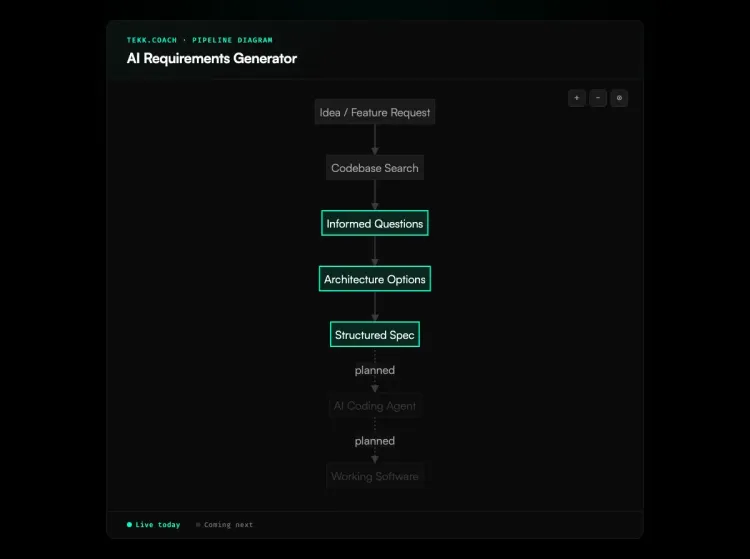
AI Requirements Generator
Your AI coding agents are only as precise as their inputs. You write a task description. The agent interprets it generously. The code that comes back is plausible, not correct — because the agent didn't have traceable acceptance criteria, explicit scope, or any awareness of how this feature touches your existing system. That's not an agent problem. That's a requirements problem.
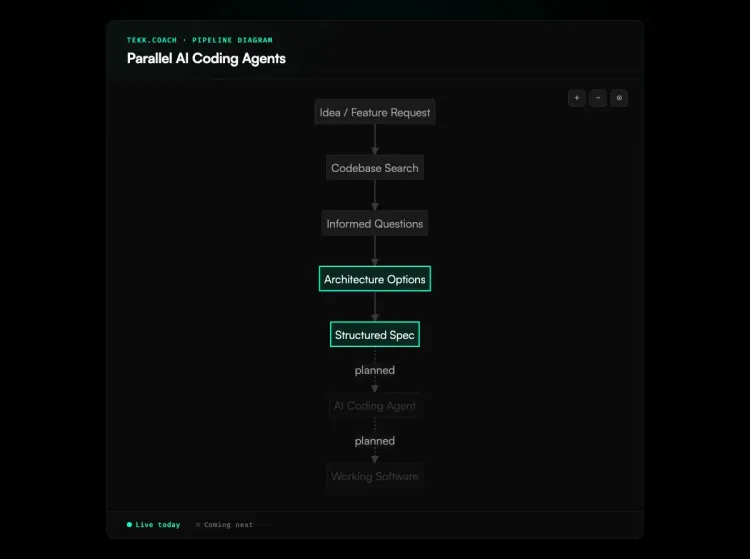
Parallel AI Coding Agents
The vision: multiple coding agents, working on independent tasks at once, all merging to a single PR. No waiting. No sequential bottlenecks.
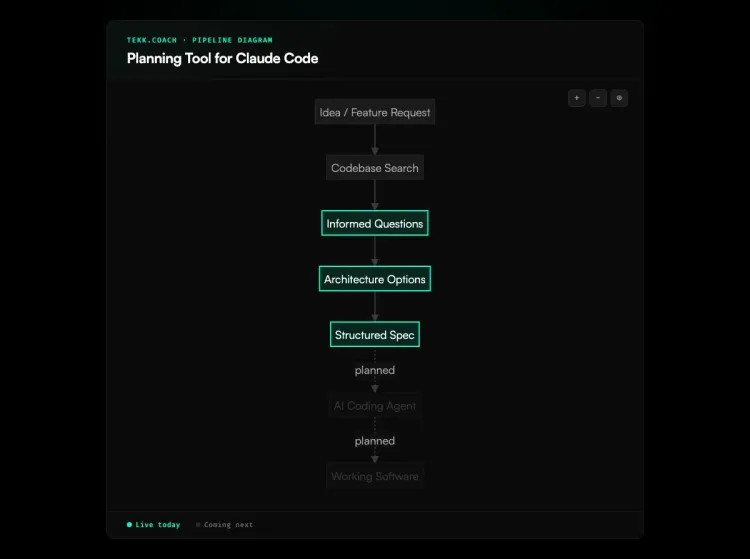
Planning Tool for Claude Code
Claude Code is a great executor. It needs a great spec. Without structured input, it improvises — wrong files, scope that crept three features wide, code that technically runs but isn't what you meant. Tekk is the planning tool that gives Claude Code exactly what it needs before it touches a single file.
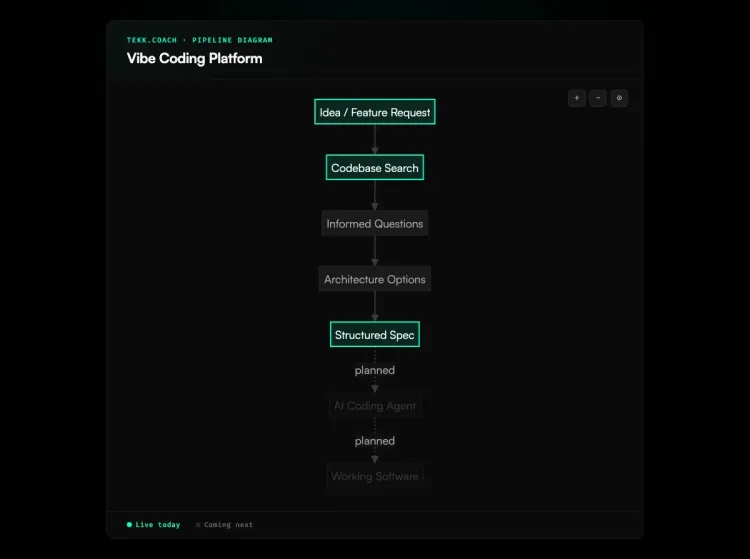
Vibe Coding Platform
Vibe coding without a platform is chaos with a fast clock. Specs live in chat threads. Agents execute on conflicting assumptions. You're shipping fast and losing control of what you've built.
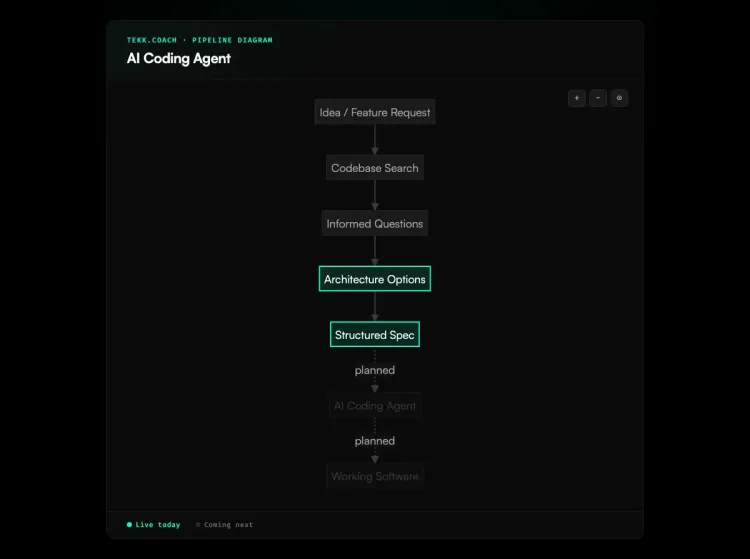
AI Coding Agent
You've got a solid AI coding agent — Cursor, Claude Code, Codex. It's fast. It writes real code across real files. And it still keeps producing rework, scope creep, and implementations that technically run but aren't what you asked for.
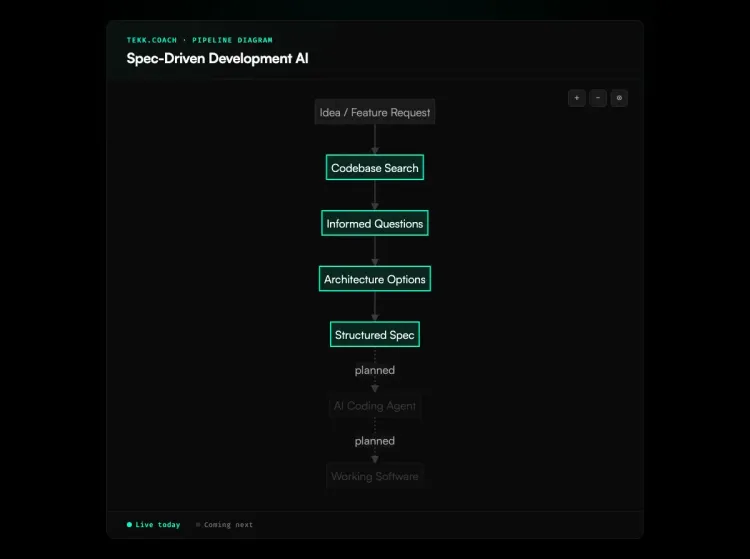
Spec-Driven Development AI
Most "AI specification writers" work the same way: structured form, a few questions, polished document. That's not spec-driven development. That's a questionnaire with formatting.
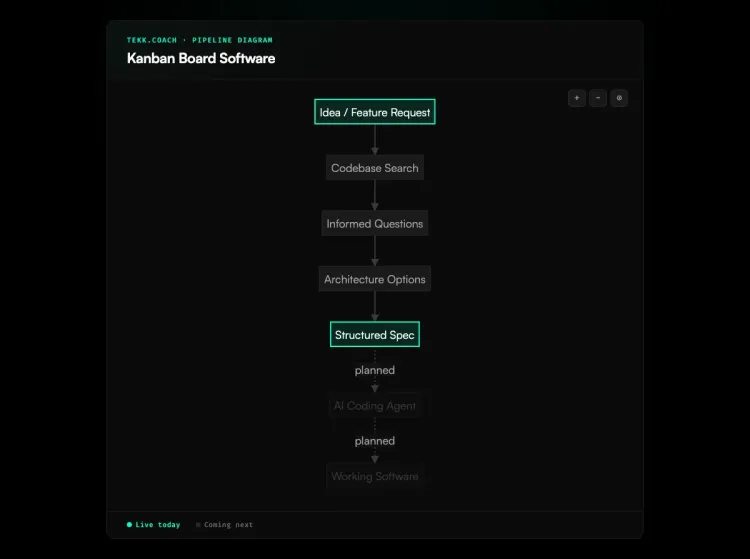
Kanban Board Software
Your kanban board is full of ticket titles. Nobody remembers what "Refactor auth module" actually means two weeks later. Tekk.coach fixes that. Each card links to a full AI planning session that read your codebase before writing anything. You get context, scope, subtasks, file references — not just a sticky note. Start free, no setup required.
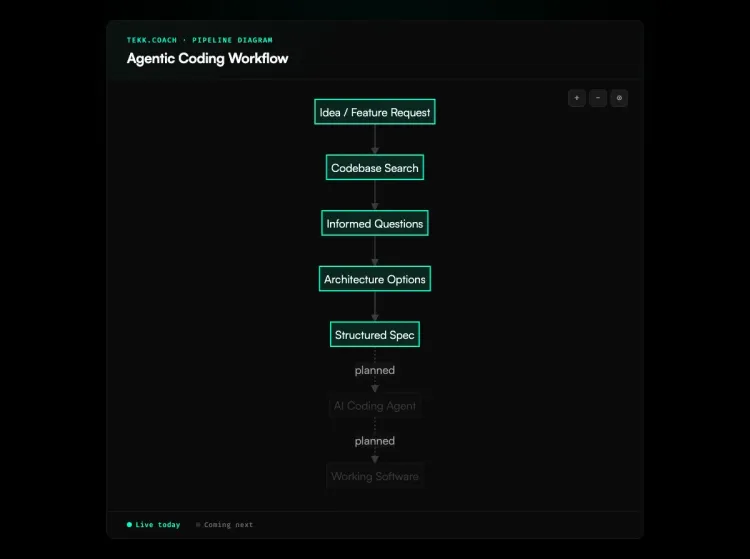
Agentic Coding Workflow
Giving your agents a paragraph and hoping for the best isn't a workflow. It's faster flailing.
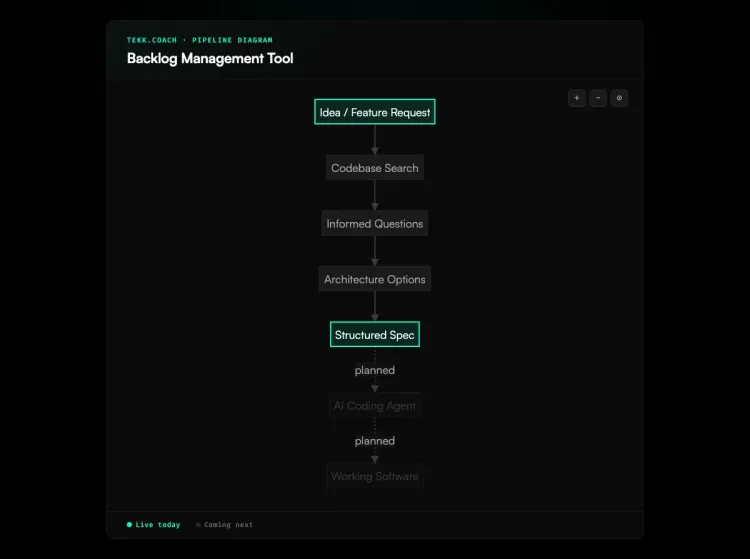
Backlog Management Tool
Your backlog isn't the problem. The tickets in it are. Most backlog items are vague one-liners — enough to remember the idea, not enough to build it. When an AI coding agent reads `"improve search performance"`, it has nothing to work with. Tekk.coach solves this by turning each backlog item into a full, codebase-grounded spec before anyone writes code. Connect your repo, describe the task, get a structured plan your agents can actually execute.
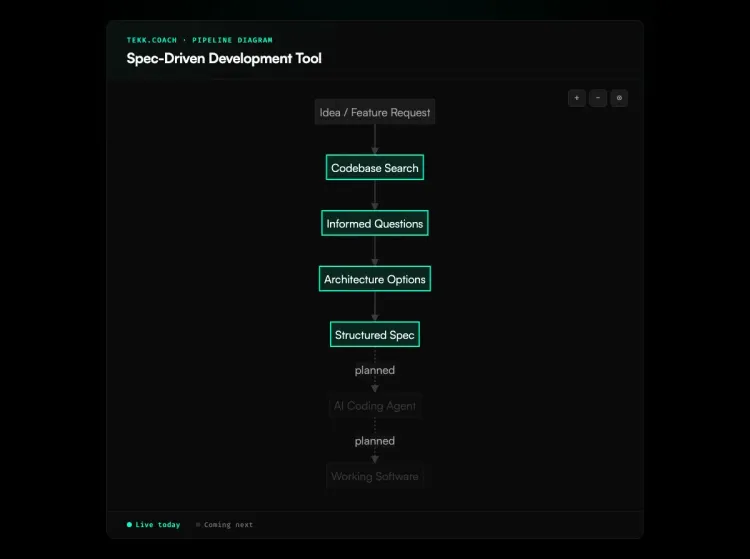
Spec-Driven Development Tool
There are over 20 spec-driven development tools now. Most of them give you a structured template and call it done. A few actually read your codebase. One connects planning, specs, and task tracking in a single workspace without asking you to change your editor or coding agent.
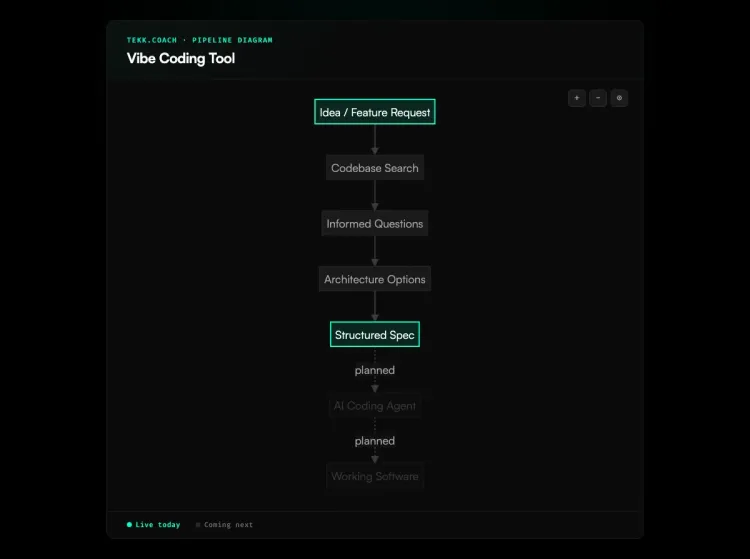
Vibe Coding Tool
Vibe coding works until it doesn't. Vague prompts send good agents in the wrong direction. You end up with code that looks finished and breaks under real use.
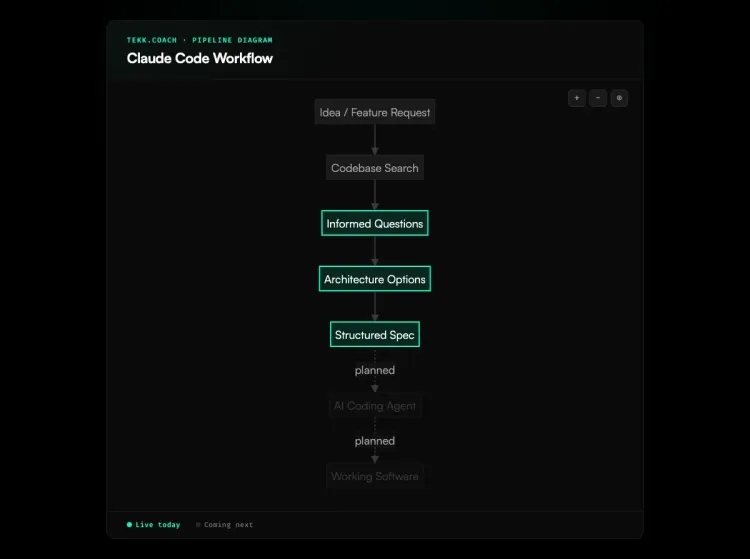
Claude Code Workflow
Claude Code is good. But if you're prompting it cold — no codebase context, no plan, just a paragraph — you're not getting its best work. You're getting generic output that doesn't know your files, doesn't respect your architecture, and needs three rounds of correction before it's usable.
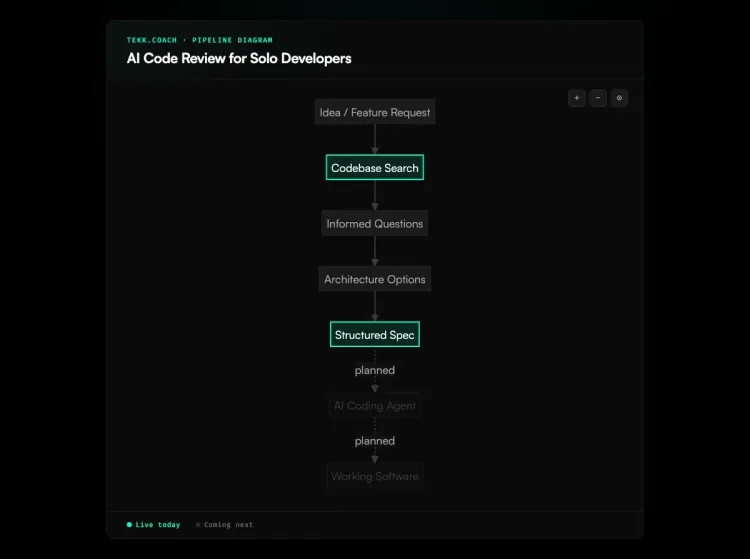
AI Code Review for Solo Developers
You ship code that only you've seen. No one else has read your auth flow, your database schema, or the service you wired together three months ago. That's not just lonely — it's a real risk. Architecture mistakes compound. Security issues go unnoticed. And by the time you find them, they're buried under months of work.
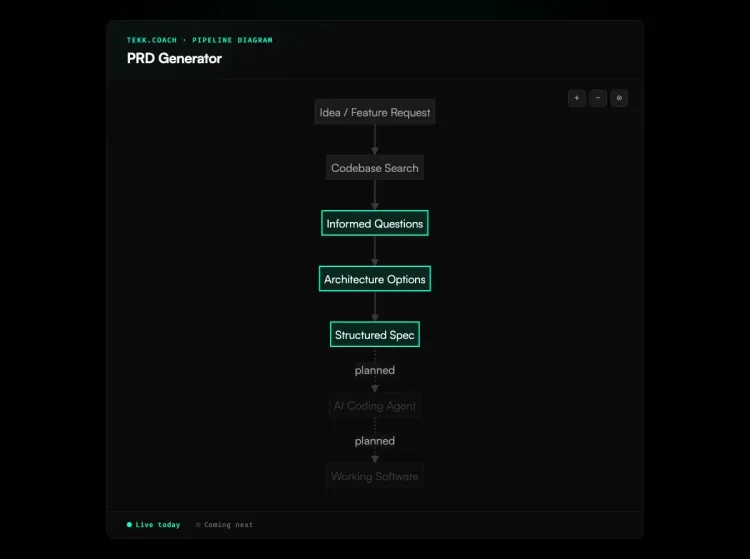
PRD Generator
Generic PRD generators fill templates. They produce polished documents from whatever you describe — with no knowledge of what your codebase actually contains.
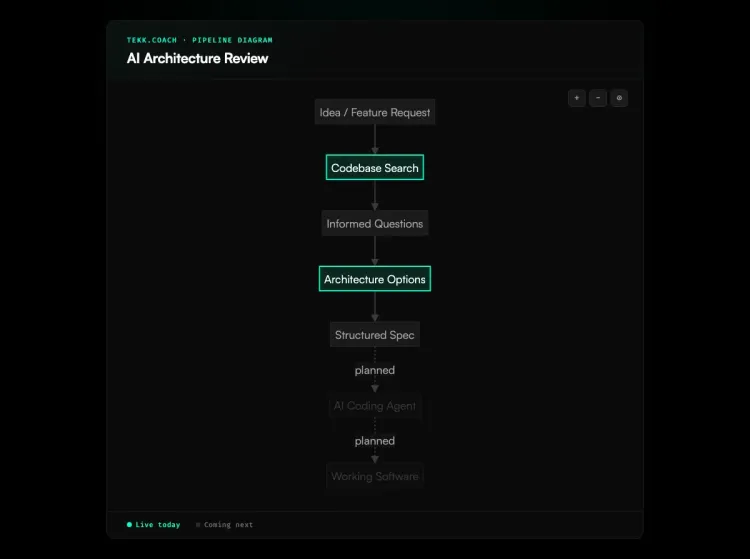
AI Architecture Review Tool
Your codebase has structural problems you haven't found yet. Tight coupling. Missing abstractions. Dependencies that shouldn't exist. They're invisible in PR reviews and silent in static analysis — until they slow everything down.
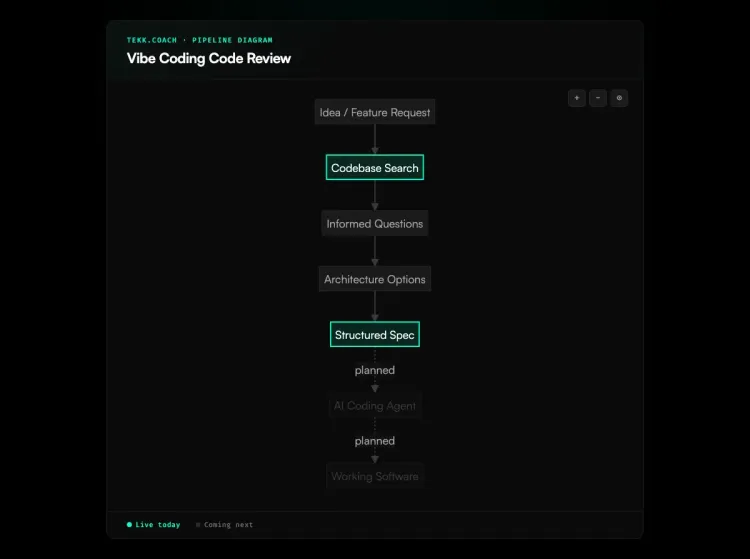
Vibe Coding Code Review
You shipped fast. That's the whole point of vibe coding. But 47% of AI-generated code contains security flaws — and they don't announce themselves. Tekk reviews your AI-generated codebase before it reaches production: security, architecture, performance, and scope creep, grounded in your actual files.
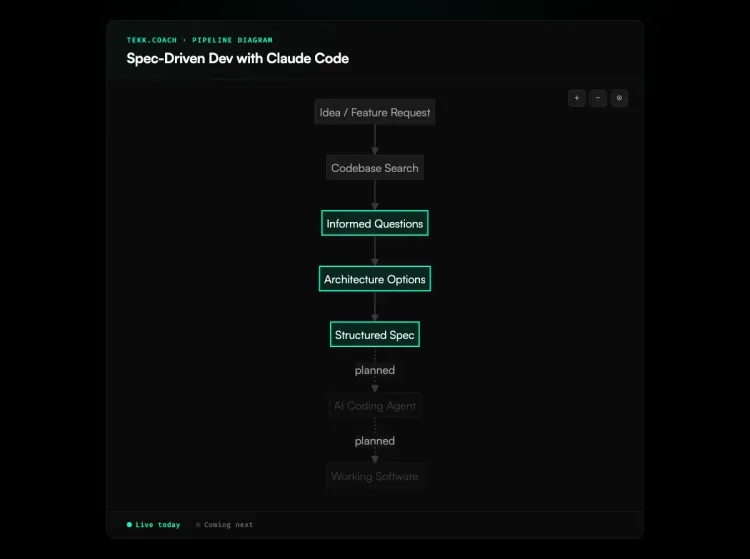
Spec-Driven Development With Claude Code
You use Claude Code. It's fast. But you're getting rework — wrong files targeted, scope that ballooned, architecture that doesn't match what you meant. The model isn't the problem. The spec is.
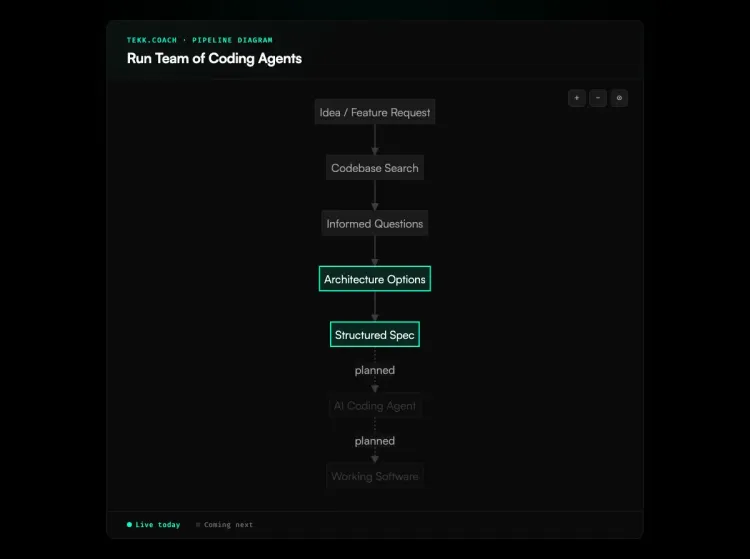
Run Team of Coding Agents
Running a team of coding agents without an orchestration layer means scattered specs, file conflicts, and agents doing duplicate work in different directions. Tekk.coach is the conductor: it reads your codebase, decomposes features into structured specs with clear task ownership, tracks everything on a kanban board, and dispatches to Cursor, Codex, Claude Code, and Gemini. Multi-agent execution dispatch is coming next. The planning and spec layer that makes it viable is live today.
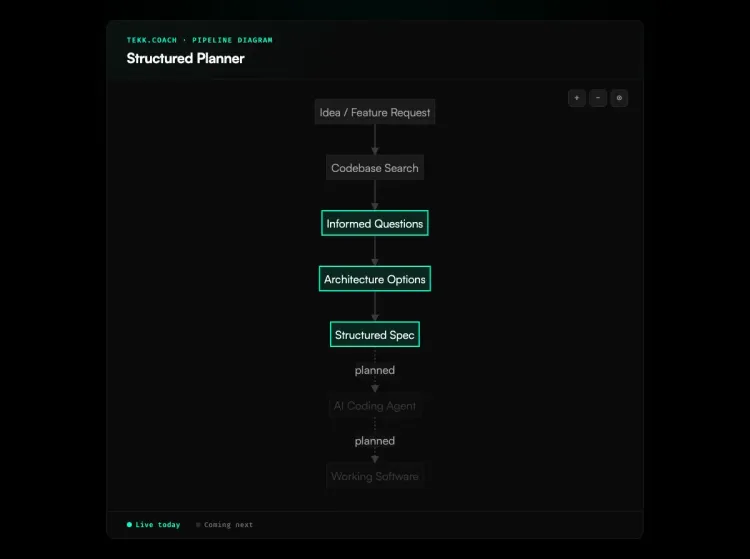
Structured Planner
Vague plans produce vague code.
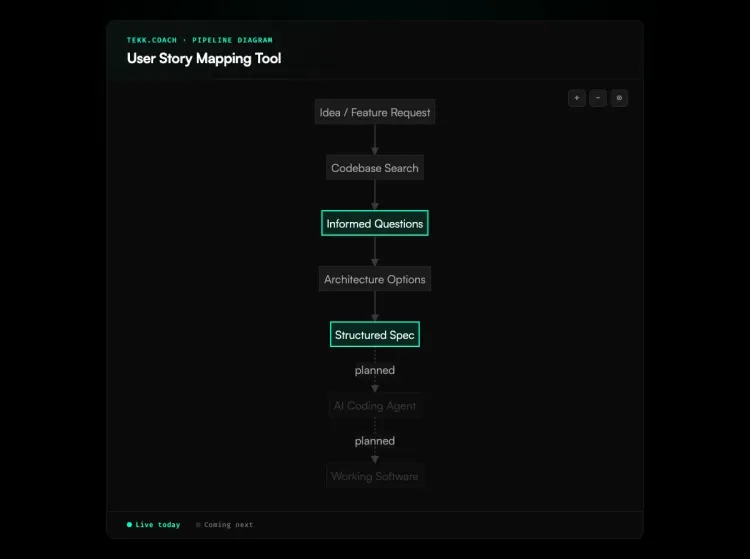
User Story Mapping Tool
User stories written in Miro or Jira have no idea what's in your codebase. So your AI coding agent executes them literally — and produces generic code. Tekk.coach reads your repo first, then generates user stories with acceptance criteria tied to real files and architecture. No workshop, no sticky notes, no manual transfer to Jira. Just specs your AI agent can actually use.
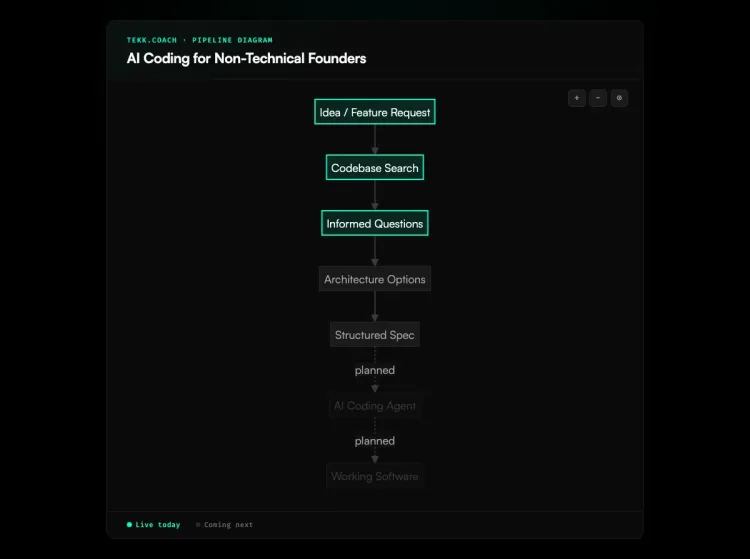
AI Coding Tool for Non-Technical Founders
You have the product vision. You have Cursor, or Lovable, or Claude Code. And you keep hitting the same wall: the AI asks you a question you don't know how to answer.